








A 35W five-port travel charger should solve a defined problem, not merely add another specification to a shopping list. For this guide, the practical question is many low-to-moderate power devices on a trip. The answer follows the equipment already in use, the physical environment, and the checks a buyer is prepared to make before relying on this model. The product name establishes a valuable starting point, but it does not replace device documentation or an inspection of the item received.
Define the job before comparing products
The intended result is many low-to-moderate power devices on a trip. List the devices involved, connector or mounting interface, expected duration, working environment and any limitation that cannot change. This prevents a convenient feature from distracting from a basic mismatch. For business purchases, include who will install or use the item and how a return will be diagnosed.
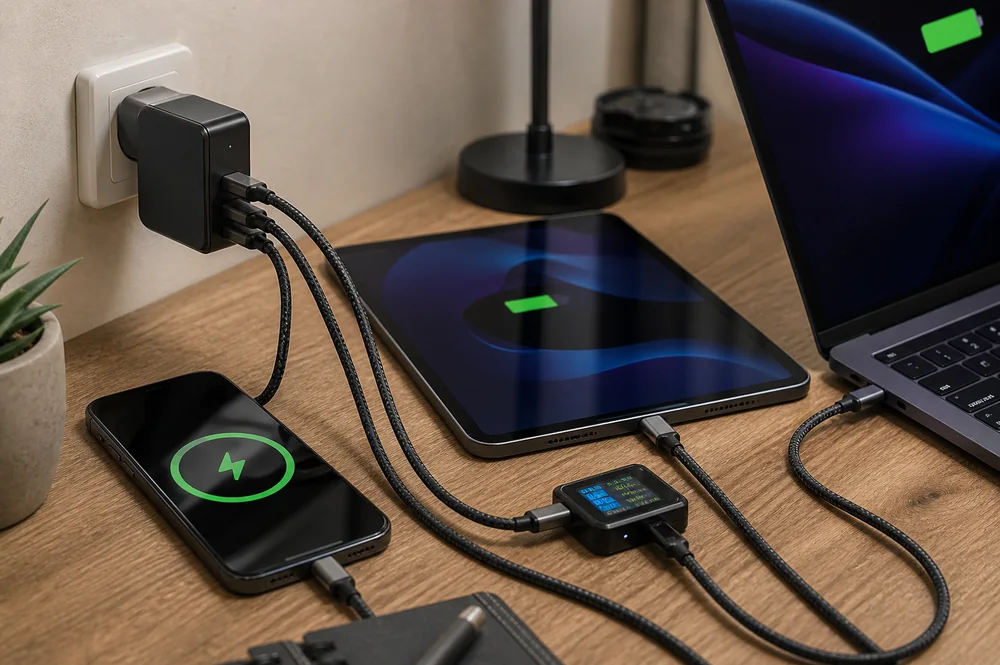
Map the planned location of the charging setup: outlet position, cable reach, ventilation, devices used together and how often the selected item will be packed. This simple map exposes problems that a unit title cannot show, such as a cable under tension, blocked airflow, an awkward port position or a device that requests more power than the source can provide.
What the available sales page actually establishes
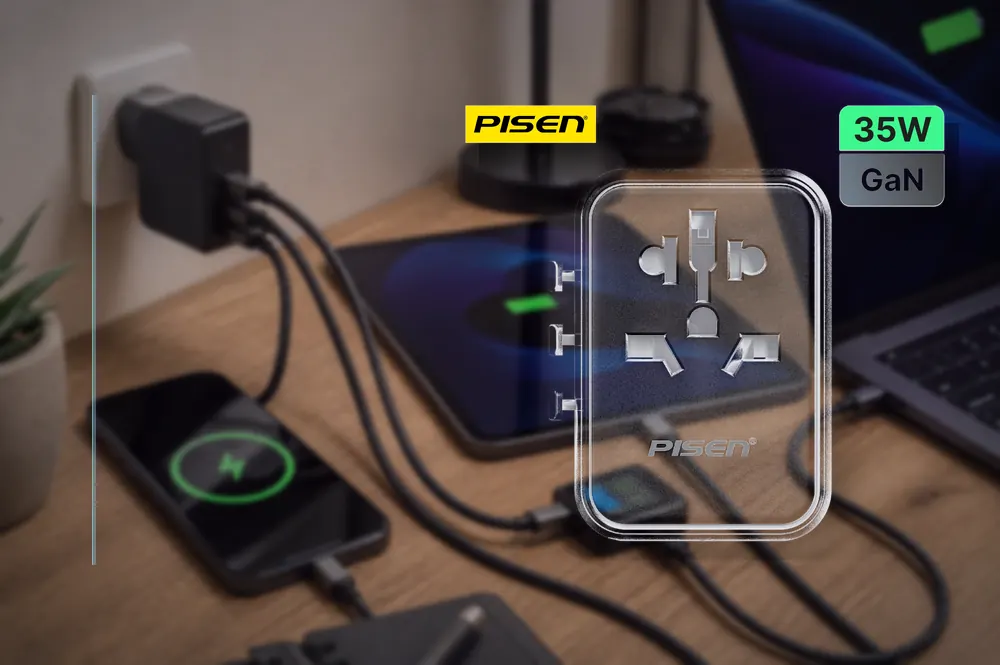
The published catalog example is PISEN Global Travel 35W 5-Port GaN Fast Charger TP-C110. Its published name identifies 35W, 5. Those details are evidence for the documented version being discussed, but they never prove every unstated feature, protocol, certification or compatible device. Establish the published product page and packaging ahead of checkout, especially when a regional plug, device generation, connector revision or included accessory could change the working behavior.
Save the adapter model, plug region and port layout with the order. Draw a small port map for the devices expected to connect at the same time. For PISEN Global Travel 35W 5-Port GaN Fast Charger TP-C110, the title supplies 35W, 5; any per-port distribution still needs to be read from the current label or manual. This avoids treating total output as though it were available from every port simultaneously.
Match every interface in the arrangement
A wattage label describes a maximum under documented conditions; it is not a command sent continuously to every device. The source, cable and receiving device must agree on a usable profile. If one part of that chain has a lower limit, the charging result follows the lower limit. Battery temperature and state of charge can reduce demand even when all hardware supports a higher value.
Use the connected equipment manufacturer’s documentation as the assembled authority for its input, connector and service work sequence. The USB-IF information about USB Power Delivery provides practical standards context. An official source explains the standard; it does not certify a specific retail product unless that product is explicitly listed by the source.
Look over prior to installation or first use
Review the housing, ports, plugs, cable exits and labels before applying power. Look for cracks, bent contacts, exposed conductor, contamination or loose movement. Begin with one reference device and observe recognition, connection stability and temperature before adding another load. Stop if there is odor, arcing, intermittent disconnecting or unusual heat.
Record that model, date, device involved and seen result. A repair shop can add the job number; a retailer can note the supplier lot; an individual user can retain the order reference. Evidence tied to the specific item is more informative than a broad quality claim and makes a problem reported later easier to isolate.
Use a controlled first-session review
Connect the lowest-demand device first, verify stable charging, and then test the intended multi-device combination. Note which cable and port each device uses. Disconnect one device and observe whether the others renegotiate or briefly interrupt; that behavior matters on a shared desk even when each device charges correctly by itself.
Useful adjacent guidance on this site includes How to Choose a GaN Travel Charger for International Use and GaN vs. Traditional Chargers: What Is the Difference?. Those resources address adjacent decisions, while the discussion here remains responsible for the narrower question of 35W five-port travel charger. Keeping those roles separate helps readers move from general principles to a catalog option-specific checklist without repeating the same article under several titles.

What to monitor after the first test
Keep the adapter ventilated and occasionally examine the plug blades, port fit and cable ends. A loose outlet, damaged cable or contaminated port can imitate a charger fault. Retail staff should label total output separately from individual-port behavior and should not promise a specific charging time without an exact-device test.
For 35W five-port travel charger, present PISEN Global Travel 35W 5-Port GaN Fast Charger TP-C110 by its model name and documented specifications, then explain how those facts relate to many low-to-moderate power devices on a trip. Keep compatibility, performance, safety and durability claims limited to current documentation or repeatable checks.
Practical decision checklist
- List every device that may charge at the same time.
- Match each device to a suitable port and cable.
- Read per-port and shared-output information from present documentation.
- Test the planned combination, not one device only.
- Leave airflow around the adapter.
- Retire damaged plugs, ports or cables.
Questions to answer before placing the order
Ask who will use the 35W five-port travel charger, which device or installation point controls compatibility, and what evidence will show that the working system works. Verify whether portability, replaceable cables, mounting range, service time or maximum output is the real priority. Document any assumption that still is influenced by the seller or device manufacturer. Resolving those questions before checkout is faster and safer than discovering an unstated requirement during installation.
If a laptop is added to the travel kit, review building a travel kit around a 65W four-port charger; its documented input requirement may change the adapter and cable selection.
Conclusion
A well-chosen 35W five-port travel charger is one that solves the stated issue without creating a new compatibility or handling issue. Use PISEN Global Travel 35W 5-Port GaN Fast Charger TP-C110 as a traceable catalog example, verify the controlling device requirements, review the physical item and complete a documented commissioning check. That process supports many low-to-moderate power devices on a trip while keeping the recommendation grounded in evidence that a buyer or technician can verify.