










Identifying a low-quality replacement phone battery requires more than reading its capacity label. A clean wrapper, familiar logo or reassuring voltage measurement cannot establish cell quality, remaining life or safe manufacture. For a repair shop, a stronger acceptance process combines traceable supply, accurate model information, physical inspection and appropriately controlled testing. Reject obvious damage immediately, and keep conclusions within what the available evidence actually shows.
Start with traceability before judging the cell
Ask who supplied the battery, how the model is identified and which lot the unit belongs to. Keep the purchase record and obtain a clear return route. If a supplier provides test or compliance documentation, compare the model, manufacturer and relevant product revision. A document for a different capacity, cell design or assembly cannot automatically support the battery in front of you.
Unclear labels, contradictory specifications, missing supplier details or an explanation that changes between documents justify holding stock for clarification. These are purchasing and traceability concerns, not laboratory proof of a defective cell. Record the discrepancy precisely so the supplier can resolve it without relying on a vague claim that the battery looks cheap.
Confirm the assembly fits the exact repair
Model compatibility includes the enclosure, flex route, connector, specified voltage and installation requirements. A pack that resembles another model may still have different dimensions or electrical behavior. Never force a connector, compress a pouch or bend a flex assembly to make a near match fit. Ask for the exact part information when a listing leaves the revision unclear.
Compare examples such as the PISEN battery listed for I12/12 Pro, PISEN battery for I13 Pro and PISEN battery for I13 Pro Max against the device and current documentation. These catalog names distinguish products; they are not independent evidence of cell performance or a recommendation to substitute models.
Use physical inspection to find rejection conditions
Examine packaging and the accessible assembly under good lighting without removing protective insulation unnecessarily. Look for swelling, dents, punctures, leakage, corrosion, torn insulation, damaged flexes and deformed connectors. A chemical odor, unusual heat or unexplained shape change means the battery should not enter routine testing or saleable stock.

The U.S. Fire Administration battery safety guidance describes warning signs that require stopping use. Do not charge a damaged battery just to collect a complete test sheet. Keep the unit out of available inventory and use the workplace’s handling and emergency procedure.
Separate capacity claims from measurements
Milliamp-hours describe charge capacity under stated conditions; they are not a complete account of energy, life expectancy or power delivery. Different nominal voltages change the watt-hour comparison. A larger printed number does not demonstrate that more usable energy fits safely inside an otherwise identical package.
A measured capacity result depends on the test method, discharge current, cutoff conditions, temperature and equipment. Readings collected using different procedures may not be directly comparable. A USB meter at a phone’s charging input includes power conversion and device consumption, so its accumulated charge is not a direct measurement of the battery’s internal capacity.
Our comparison of standard-capacity and high-capacity iPhone replacement batteries addresses that purchasing distinction. Request a documented method rather than accepting an unexplained capacity screenshot or a promise that every sample will deliver the advertised number under any conditions.
Know the limits of simple electrical checks
A voltage reading can help a trained person compare a battery with its specified condition, but it does not establish capacity, internal resistance, protection performance or long-term reliability. Battery-management electronics can also affect interpretation. Do not bypass protection, short terminals, improvise a charging connection or use a bare probe arrangement that risks bridging contacts.
Weight and wrapper finish may expose inconsistencies within a documented identical lot, but neither is a universal quality scale. Legitimate construction differences can change weight. A heavier cell is not automatically better, and neat printing does not establish authenticity. Investigate discrepancies against a known specification rather than inventing a pass threshold.
Make functional testing repeatable and limited
For undamaged, correctly identified stock, follow the device and battery service instructions using suitable equipment and competent personnel. Keep device model, software version, battery identification and test conditions in the record. Check the reported complaint separately from general behavior so an existing device fault is not attributed automatically to the replacement battery.
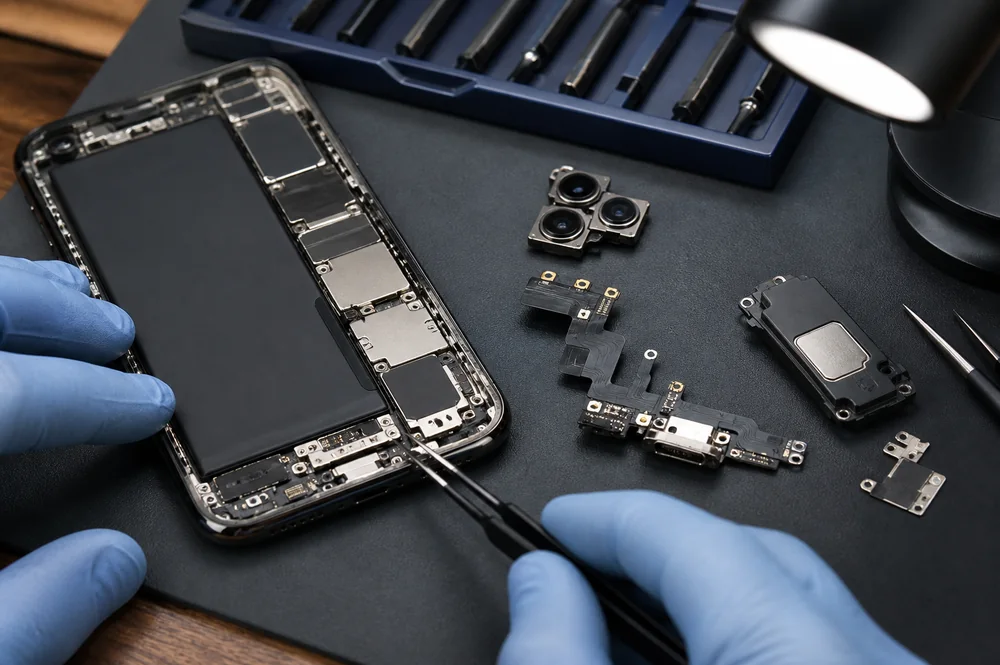
The guide to testing an iPhone replacement battery describes the related service workflow. A short successful trial cannot prove years of cycle life, and a sample test does not certify every unit in a shipment. State the sampling method and its limitations when discussing results with customers.
Interpret software messages without overstating them
When comparing suppliers, agree in advance on the information needed to investigate a return. Useful records include the lot reference, installation date, device model, observed symptom and the conditions of any authorized test. Avoid mixing unrelated complaints such as accidental damage, short runtime and a software verification message into one unexplained failure percentage.
Compare like-for-like periods and quantities before drawing a commercial conclusion. A new supplier with two installed units has not demonstrated the same history as one with hundreds of documented repairs. A lower purchase price can be outweighed by repeat labor, but that calculation requires actual records. Keep a new lot identifiable until its receiving checks are complete instead of assuming that an established brand removes the need for inspection.
A battery-health percentage or verification message is one piece of information, not an independent inspection of the cell. Apple’s guidance on iPhone battery performance explains that battery information may be inaccurate when a genuine battery cannot be verified. A warning does not by itself establish why an aftermarket battery failed; the absence of a warning does not establish its quality.
Accept stock only when identity, condition and the agreed evidence meet the repair shop’s requirements. Keep unresolved discrepancies on hold, record rejected lots and explain what was actually checked at handover. This creates a useful quality record without converting appearance, marketing language or a brief test into unsupported safety assurances.