







Replacement phone batteries swell when internal chemical reactions generate gas inside the cell. The resulting pressure can deform a pouch and lift a phone’s screen or back cover. Swelling is a warning condition, not a normal upgrade in capacity and not something to flatten back into shape. Stop using and charging a suspected swollen battery, arrange qualified assessment and avoid experiments intended to restore it.
Recognize a physical change before diagnosing its cause
Possible signs include a newly raised screen, a widening case seam, a back cover that no longer sits flat or a pouch that appears rounded instead of flat. A loose adhesive seal, bent frame or impact can also change a phone’s shape. Do not press the display down to distinguish these causes: pressure can damage a battery hidden underneath it.
If a phone becomes unusually hot, leaks, smells abnormal, hisses or smokes, prioritize people’s safety and follow local emergency instructions. Do not carry a hot or smoking device through the shop to continue an inspection. The U.S. Fire Administration battery safety guidance lists heat, shape changes, leakage, odors and unusual noises as warning signs requiring an end to use.
Understand what gas generation does and does not prove
A lithium-ion battery contains reactive materials separated and controlled within the cell. Aging, damaging conditions or faults can lead to reactions that produce gas. In a flexible pouch, that gas can expand the enclosure. The visible symptom does not identify the precise reaction or establish whether the original cause was manufacture, storage, charging conditions or physical damage.
A service record should distinguish observation from explanation. Write that the screen was lifted and the battery appeared deformed if those are the facts. Do not label a supplier’s whole product range defective solely because one returned phone has a swollen cell. Conversely, the absence of visible swelling does not prove that another battery is safe or healthy.
Heat and time can contribute to deterioration
Repeated exposure to heat can accelerate battery aging. A phone left in a hot vehicle, used heavily while charging or stored beside a heat source may experience conditions different from normal indoor use. Battery history matters alongside the replacement date: the cell may have spent time in distribution or storage before installation.
Apple’s explanation of iPhone battery aging and performance describes chemical age as a combination of time, charge cycles and care. It does not provide a guaranteed timetable for swelling, and its examples do not establish the quality of a particular aftermarket cell. Avoid promising that a battery will remain safe for a fixed number of years.
Mechanical damage changes the investigation
A bent, squeezed or punctured pouch may be damaged internally even when the outer mark seems small. Removal tools, misplaced screws, tight clearances, incorrect adhesive and an impact can all require investigation after a repair. Do not attempt to verify the suspected mechanism by repeating a destructive action on another battery.
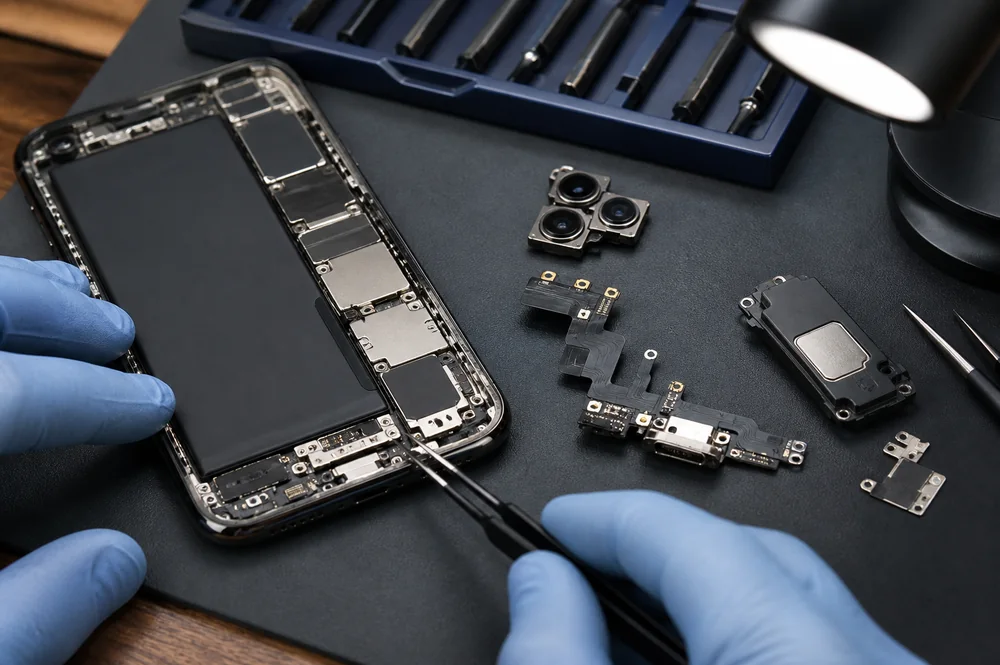
The replacement must match the exact device and installation requirements. Catalog examples such as the PISEN battery listed for I12/12 Pro and PISEN battery for I13 Pro identify different products. Their presence in a catalog does not establish the cause of a failed repair or prove suitability for another model.
Charging complaints require more than blaming the adapter
The phone’s charging controls, battery protection electronics, cable, power source and thermal conditions all belong in a qualified investigation. A high wattage printed on an adapter does not by itself prove overcharging; supported devices negotiate and regulate power. Equally, using a familiar charger does not make a physically damaged battery acceptable to keep using.
Do not reconnect a swollen battery to test whether another charger changes the result. Troubleshooting a healthy device and examining a damaged cell are different procedures. Record the charger and cable used, software warnings, previous drops, liquid exposure and when the deformation was first noticed. Preserve available evidence without carrying out additional charging trials.
Handle the return without creating a second hazard
Keep a suspected damaged battery outside usable stock and follow the workplace’s assessed handling and emergency plan. Arrange assessment by a competent technician and obtain instructions from an appropriate waste or recycling service. Do not puncture, freeze, immerse, flatten or deliberately discharge a swollen cell. A battery that temporarily cools or stops expanding has not thereby become serviceable.
For ordinary inventory prevention, our guide to storing replacement phone batteries safely covers model separation, environmental controls and returns records. It should not be read as an instruction to store a damaged battery alongside undamaged retail stock.
Document the outcome and close the stock loop
Customers may ask whether a normal battery-health percentage makes the phone safe to keep using. It does not override visible deformation, and software cannot replace physical assessment. Likewise, removing a tight case or stopping a demanding app may reduce temperature without resolving the cause of an expanding battery. Explain the difference between a temporary symptom change and a service decision.
Do not guarantee that a replacement alone will resolve every related fault. Pressure can affect the display, enclosure or other components, and a charging or installation issue may still require investigation. A technician should document those findings separately, discuss the repair scope with the customer and avoid reusing visibly damaged parts simply because the phone still turns on.
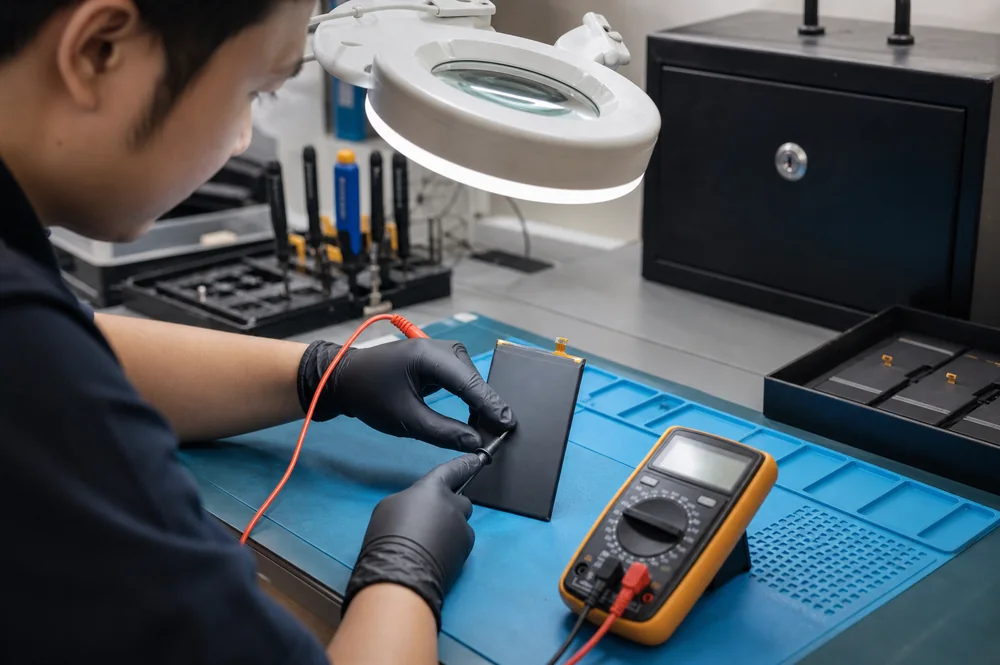
Keep the product code, supplier lot, installation date, complaint, observed condition and disposition in the repair record. Note whether the cause was established, suspected or unknown. This prevents a warranty summary from turning an unverified explanation into a factual claim. Check whether related stock or installation practices need review, without assuming every unit has the same fault.
The guide to reducing warranty claims on replacement phone batteries provides an adjacent business workflow. For recycling, use the EPA guidance on used lithium-ion batteries and the receiving service’s instructions. Damaged-battery transport requires specific assessment; an ordinary return label is not sufficient proof that shipment is appropriate.