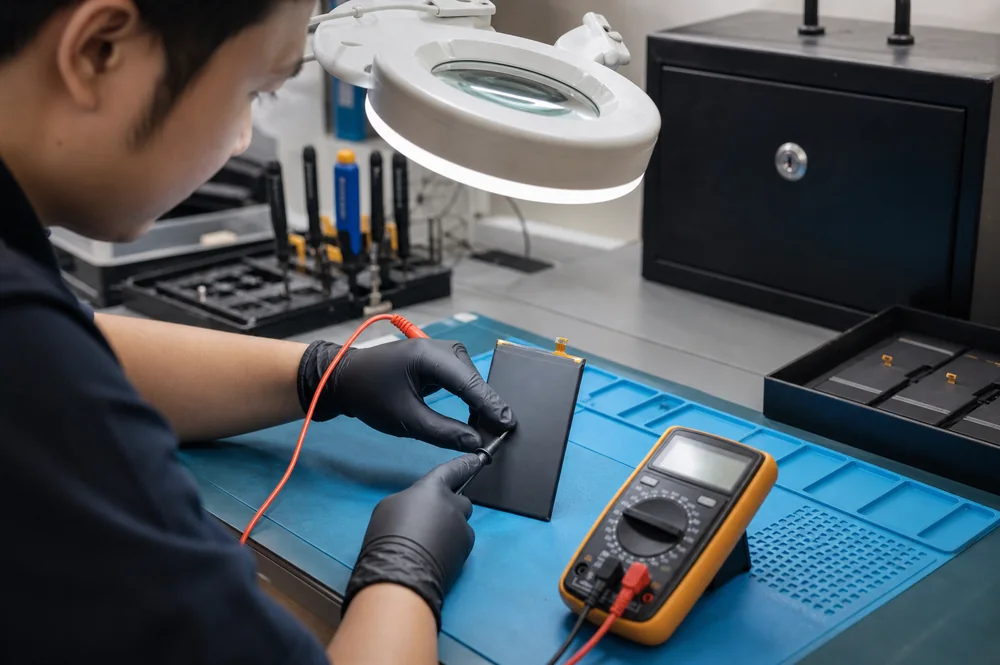










Replacement screen quality affects a repair business through more than its purchase price. An inexpensive display can become costly if it produces a repeat visit, consumes diagnostic time or disappoints the customer. Equally, a more expensive display does not automatically produce a better margin. Evaluate the exact assembly, installation process and documented return outcomes before choosing a screen range.
Calculate contribution after repeat work
Start with the repair price and deduct the screen, consumables, payment costs and technician labor. Then account for the average cost of repeat work associated with that repair type. A callback can include diagnosis, disassembly, another adhesive set, transport and customer communication. A supplier credit for the part may not reimburse these other costs. Use the shop’s actual records rather than assuming a universal defect rate.
A useful comparison is contribution per completed repair after attributable callbacks. Keep the calculation separate from total business profit, which also includes rent, insurance and other overhead. Compare equivalent phone models and similar reporting periods. An example calculation can illustrate the method, but it should never be presented as a measured saving unless the shop has the underlying evidence.
Understand what the screen grade identifies
Terms such as Incell, hard OLED, soft OLED, refurbished and original pull describe different aspects of a display or its supply history. They are not a universal quality ranking across every model and supplier. Ask what the exact listing includes, which parts are reused and which properties have been tested. Review replacement displays and repair quality before treating a grade label as a performance guarantee.
Compare brightness, viewing behavior, touch response, physical fit and functions relevant to the customer. Do not promise original-manufacturer performance for an aftermarket assembly without evidence. Apple’s guidance on genuine iPhone displays explains why replacement history and display behavior matter. It does not certify third-party catalog products.
Separate compatibility from workmanship
Confirm the exact phone model, assembly revision, frame requirements and connector arrangement before ordering. Two screens with similar dimensions may serve different models. Note whether a supplied assembly requires component transfers and whether the intended repair has model-specific calibration steps. The supplier’s label and the technician’s job sheet should identify the same part before the package reaches the bench.
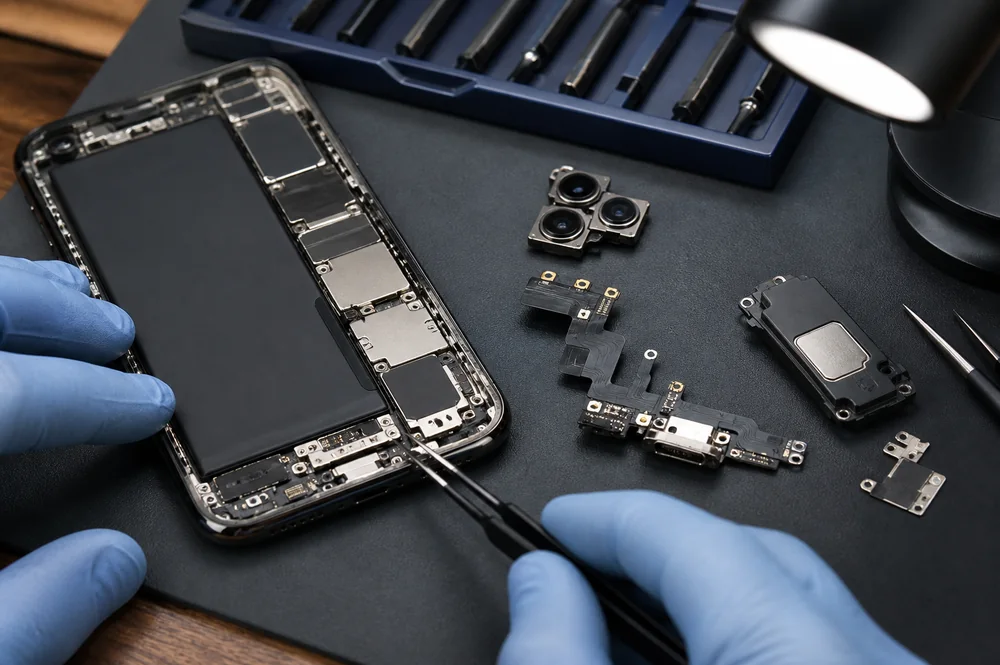
Inspect the glass, frame, flex cables and connectors before installation. A damaged flex or contaminated connector can create a fault that resembles a low-quality display. Record the condition at receiving and keep supplier lots identifiable. Do not assume that every failure after installation originated in the replacement assembly; handling, the device’s existing damage and installation can contribute.
Test before final assembly where the procedure permits
Use the manufacturer’s model-specific repair procedure and trained personnel. Check relevant display and touch functions before committing to final adhesive or closure when the approved procedure permits that stage. A working image does not establish uniform touch response or the absence of intermittent problems. Test appropriate areas of the screen, brightness controls and functions affected by the repair.
Apple’s Self Service Repair information provides access to supported repair resources. Avoid a universal sequence for every iPhone generation. Power handling, component transfer and repair completion requirements can differ. Never force connectors or connect parts in a way that conflicts with the applicable procedure.
Use stock examples to compare specifications
The 3C EASY-New Phone Screen Replacement IXR (Incell/Black) and 3C EASY-New Phone Screen Replacement I13 Pro Max (Incell/Black) are examples for different model requirements. A shared technology label does not make them interchangeable. Check the current product record against the exact device.
The 3C EASY-New Phone Screen Replacement I14 Pro Max (Soft OLED/Black) represents another listed assembly type. Its name alone cannot establish measured brightness, calibration support or a callback rate. Request missing model-specific evidence before using those claims in a quotation.
Protect the screen between receiving and installation
Handling damage can erase the benefit of selecting a suitable display. Keep assemblies protected from pressure, stacked tools and uncontrolled bending of flex cables. Maintain model labels when repacking individual units and avoid loose mixed stock. Follow supplier packaging guidance and review storing and transporting replacement screens without damage when organizing the stockroom and delivery handoff.
Separate suspected defects from saleable stock and record why each item was quarantined. An unlabelled return can re-enter inventory and create another failed repair. Preserve photographs and packaging where needed for a supplier claim. Tracking the history of the physical unit is more useful than making a broad accusation about every screen from the same brand.
Explain the offer before the customer decides
Describe the assembly type, documented limitations and applicable shop warranty clearly. Distinguish a supplier’s product warranty from the shop’s service terms. Do not make claims about waterproofing, impact survival or original appearance merely to justify a higher price. Record the customer’s agreed choice and the functions checked at handover, while preserving privacy in service records.
Review results by model and supplier lot
Classify complaints consistently: visible defect on arrival, touch problem after installation, physical damage, customer preference or an unresolved device issue. Separate a confirmed part defect from a goodwill refund. Otherwise, a high refund count can be mistaken for poor manufacturing when the underlying cause is an unclear quotation or handling problem. Keep customer identifiers private when sharing evidence with suppliers.
Review stock age alongside the repair outcomes. Ordering a wide range may improve availability, but slow-moving assemblies tie up funds and require protected storage. A narrower range with a reliable replenishment process can sometimes serve the actual repair mix better. Decide from recorded demand, delivery reliability and service requirements rather than expecting one purchasing formula to suit every shop.
Keep the comparison repeatable by defining the reporting period and recording both successful repairs and complaints. A supplier should be assessed against the same criteria used for its alternatives, with uncertainty stated when the sample is small.
Record repair volume, complaint type, confirmed cause, supplier credit and repeat labor. Compare those results with the buying cost before changing stock policy. Small samples or inconsistent testing can make a comparison misleading. Quality improves profitability when the evidence shows fewer avoidable costs or a better customer outcome; the purchasing decision should follow that evidence rather than a grade name alone.